Clean Structured Data Comes Before Better Search, Reporting, and AI
Before a team can improve dashboards, search results, AI answers, or financial reporting, it needs document data that is clean, searchable, and structured.

Piotr Wozniak
8 min read / May 8, 2026
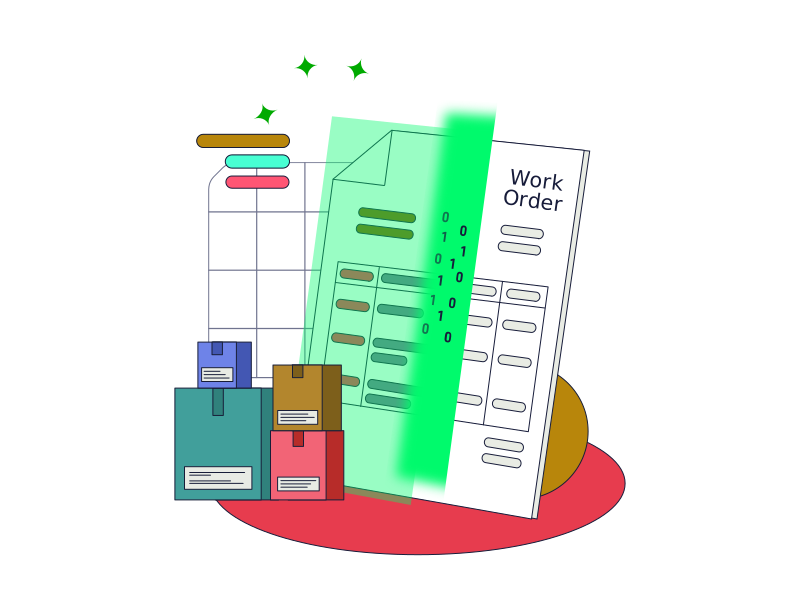
Structured document data card illustration
Every company wants better dashboards, smarter search, cleaner reporting, and AI tools that answer questions with confidence. The less glamorous requirement is structured data. If the source information is scattered across scanned documents, paper forms, handwritten notes, disconnected spreadsheets, and file names that only one employee understands, the final layer will always feel weaker than expected. Search cannot find what was never extracted. Reporting cannot summarize values that were typed inconsistently. AI cannot reason cleanly over information that remains locked inside images.
Search needs fields, not just files
A folder full of PDFs may look organized, but it is often not searchable in the way operations teams need. A file name might contain a customer name or month, but the important details usually live inside the document: invoice number, service date, item code, handwritten note, location, signature, quantity, or total. If those fields are not extracted, people end up searching by memory. They ask who handled the file, when it arrived, or which folder someone might have used.
Structured extraction changes that. When document information becomes fields, a team can filter, compare, and retrieve records without opening every file. This matters for accounting teams checking invoices, real estate teams reading lease details, healthcare administrators reviewing intake forms, and any department that receives business documents in inconsistent formats. Good search starts with making the inside of the document available to the system.
Reporting fails when source data is inconsistent
A dashboard is only as credible as the input behind it. If one person types a supplier name one way, another person abbreviates it, and a third person leaves it blank because the handwriting was unclear, the final report becomes a negotiation instead of a decision tool. The chart may look polished, but someone still has to reconcile the source rows, explain outliers, and clean the spreadsheet before leadership can trust it.
This is why structured document processing is a reporting issue, not only an OCR issue. The goal is not to recognize characters for their own sake. The goal is to put values into consistent columns, preserve enough source context for review, and reduce the number of manual corrections before the data reaches a dashboard. When the source layer improves, every later layer becomes easier: search, reporting, audit, forecasting, and customer support.
AI works better when the ground truth is organized
AI systems can summarize and reason across large amounts of text, but they still need reliable ground truth. A model can be impressive in a demo and still struggle in a real workflow if the documents feeding it are incomplete, duplicated, poorly named, or manually typed with errors. Clean structured data gives AI something more stable to work with. It turns a pile of documents into a dataset that can be checked, joined, filtered, and reviewed.
The practical lesson is simple: before investing in more advanced AI layers, teams should look at the document intake layer. Where does the data come from? Which fields are repeatedly retyped? Which documents arrive as scans or photos? Which reports require manual cleanup every week? Answering those questions often reveals the fastest path to better AI outcomes: organize the source data first, then build smarter workflows on top of it.
Takeaway
Better AI and better reporting start before the dashboard. They start when document data becomes structured, searchable, and clean enough for people and systems to trust.

Written by
Piotr Wozniak
Data quality and reporting strategist