Why Manual Data Entry Still Hurts Teams in the AI Era
AI is everywhere, but workers still move information from PDFs, scanned forms, emails, and paper into spreadsheets by hand. The cost is time, trust, and data quality.

Marek Zielinski
9 min read / May 8, 2026
Office team reviewing paper data and digital records
The strange thing about the AI era is that many teams are surrounded by intelligent software and still spend hours moving information from one place to another by hand. A company can have a modern CRM, an analytics dashboard, a chat assistant, and a cloud accounting system, but the work can still begin with someone copying numbers from a PDF, typing values from a scanned form, or rebuilding a handwritten table inside Excel. The problem is not that people do not know automation exists. The problem is that business information often arrives in formats that ordinary software cannot use cleanly.
The bottleneck is still the first mile of data
Data entry survives because the first mile of data is messy. Customers send PDFs. Field teams take phone photos. Vendors attach scanned invoices. Schools and clinics still collect hand-filled forms. Construction, logistics, healthcare, real estate, accounting, and local services all create information in places where perfect digital forms are not realistic. The moment that information needs to become a report, a spreadsheet, or a system record, a human is often asked to bridge the gap.
That bridge is expensive. Gartner has estimated that poor data quality costs organizations an average of $12.9 million a year. A 2025 Parseur and QuestionPro survey reported that workers spend more than nine hours a week on repetitive data entry and that the cost can reach $28,500 per employee per year in the United States. Quickbase has also reported that many workers lose more than 10 hours a week chasing information and another 10 hours on administrative manual work. The exact number changes by industry, but the pattern is consistent: manual transfer creates a hidden tax on work.
AI does not help if the data never becomes usable
Generative AI made it easier to summarize text, answer questions, and draft content, but those abilities do not automatically solve operational data entry. If the original data is trapped inside handwriting, scanned tables, low-quality PDFs, or inconsistent attachments, the team still needs a reliable way to convert that material into structured records. AI can help after the data is readable, but reporting, forecasting, reconciliation, and search all depend on the data being clean enough to trust.
This is why manual data entry remains visible inside modern companies. The expensive part is not only typing. It is checking whether the typed value is right, finding the source document again, correcting a row after someone notices a mistake, and explaining why the dashboard does not match the paperwork. IBM's 2024 breach research put the global average cost of a data breach at $4.88 million, which is a different problem, but it points to the same operational truth: messy information flows are not harmless. When data moves through weak processes, cost and risk travel with it.
The practical answer is not full automation everywhere
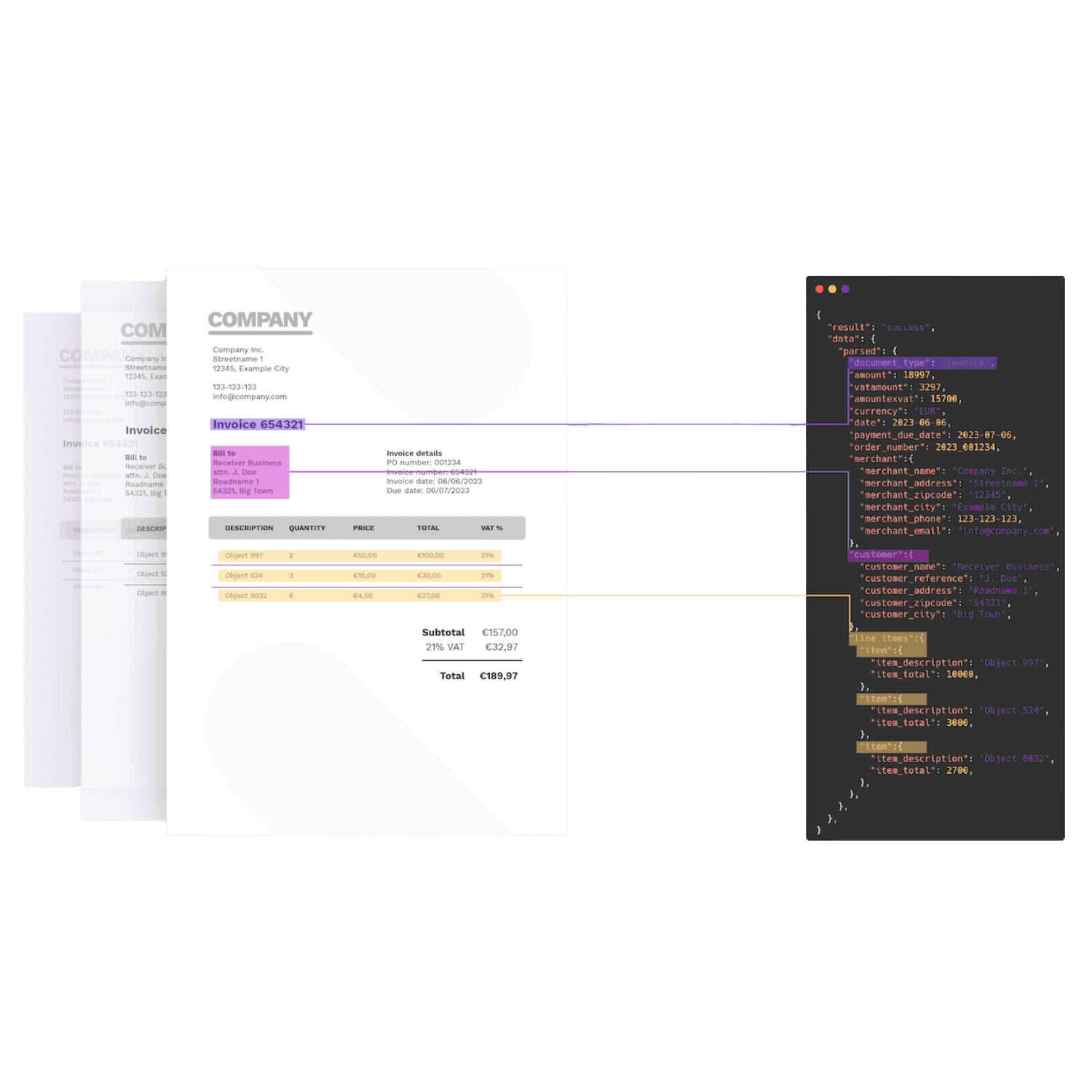
The most realistic answer is not to promise that every document will be perfect and every human will disappear from the process. Teams need a workflow that removes repetitive typing while keeping review clear. That means accepting mixed files, preserving the original page, extracting the useful structure, showing the result, and letting the person who understands the work confirm the output. In other words, the product should automate the transfer and make the review easier.
The companies that handle this well do not treat data entry as a tiny clerical task. They treat it as an intake problem, a quality problem, and a speed problem. They ask where the information starts, who needs to trust it, what output format is useful, and what happens when something fails. That framing is more useful than saying AI will fix everything. The real win is simple: fewer hours retyping, fewer silent errors, faster review, and cleaner data for the systems that come next.
Takeaway
Manual data entry is still alive because business documents are still messy. AI becomes more useful when the first mile is handled: capture the paper, extract the structure, and give people a result they can trust.

Written by
Marek Zielinski
Operations data researcher